About the practice
One person does this work, and you will be talking to him
I am Angelo J. Willems. Willems Financial & Regulatory Reporting is my practice, and FALA and FEC reporting to the Centrale Bank van Aruba is what it does. I have filed monthly for Aruban companies without a break since January 2021.
That is worth saying plainly, because it is the part most compliance websites obscure. There is no team behind a logo here. The person who reads your enquiry is the person who classifies your transactions, submits the return, and answers the Bank when it writes back.
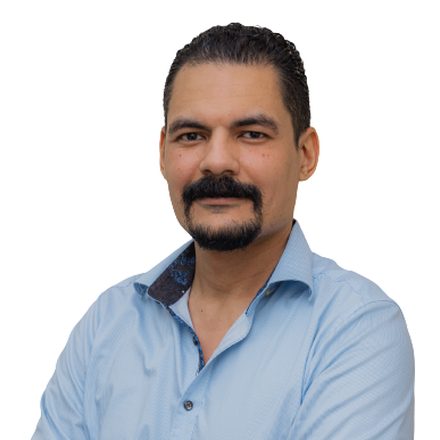
Principal, Aruba
Track record
Five years of filings, without a gap
Filing monthly for Aruban companies without interruption since January of that year.
Monthly returns prepared and submitted to the Centrale Bank.
Filed as RE Administrator, so the portal access and the submission sit with me.
Returns that the Bank queries or rejects get corrected and resubmitted until they are accepted.
How I got here
Regulated pricing, then hedging, then reporting
I started in government as a policy advisor, which is where I learned how regulatory files are actually read — that the argument which wins is rarely the loudest one, but the one traced to the operative text.
From there I moved into oil and gas. The work I am most pleased with from that period is a pricing case: I built the analysis that persuaded Aruba’s Department of Economic Affairs to revise the controlled household LPG price in 2022, ending a structural loss on the cooking-gas line that had been running for years. Nobody had put the numbers in front of the regulator in a form that made the decision straightforward. That is, more or less, the same job I do now.
Today I work in financial planning and analysis for a state-owned utility — cost allocation, hedge accounting under RJ 290, and regulatory reporting — alongside running this practice. The two reinforce each other: the discipline of a monthly close and an auditor’s questions is the discipline a Centrale Bank filing needs.
I also build the software I use. My reporting tooling is my own, which is why automation is something I deliver rather than something I recommend.
- Education
- MSc Finance, Erasmus University Rotterdam. International Business, and Finance & Investment.
- Day role
- FP&A, hedge accounting and regulatory reporting for a state-owned utility.
- Practice since
- January 2021, filing monthly without interruption.
- Languages
- Papiamentu, Dutch, English, Spanish — correspondence in whichever suits you.
- Also built
- Mercala, a real estate data platform for the Aruban market.
How I work
Four habits that are not negotiable
Primary sources only
Positions come from the state ordinance and the amending decree actually in force, traced through its legislative history — not from a summary of a summary. Where the Centrale Bank’s own practice governs, I ask the Bank about procedure.
Open questions stay open
When a regulatory question is genuinely unsettled, my advice says so. A confident answer that later turns out to be wrong costs you more than an honest “this is not yet decided, and here is what it turns on.”
Scoped before committed
New jurisdictions and complex matters start as a fixed-fee investigation with a defined question, not an open retainer. You find out what an answer costs before you agree to look for one.
Nothing moves before the NDA
Confidentiality is signed first. Client files stay separate, and where a question must go to the Bank to scope work, it goes as a general question of procedure with no client attached to it.
For financial institutions
Capacity, review and automation
Banks file on a different scale and to a different template, but the failure points are the same: classification, reconciliation, and a working paper file too thin to survive an inquiry. I work alongside a reporting team rather than in place of one.
I take the tedious part. Your team still signs the report — and it is still accurate.
- Peak and absence cover for the monthly filing cycle, without onboarding a permanent headcount.
- Second-line classification review on outflows and commission, before the filing goes out.
- Workflow automation of the recurring compile-and-reconcile steps, built around your existing formats.
- Working paper structure that makes variance explanations a lookup instead of an investigation.
- Branch and department briefings on what the rules require from the people entering the data.
Start with a determination
The first question is always the same: am I actually required to file, and for which accounts? It takes one short conversation to scope and a fixed fee to answer. Message me and we will find out where you stand.
Trading as Willems Financial & Regulatory Reporting · registered at the Chamber of Commerce Aruba as Stochastic Traders
KvK H50872.0 · Weg Fontein 23, Standard Ville / Rooi Hundo · +297 564 7578 · willemsreporting.com